
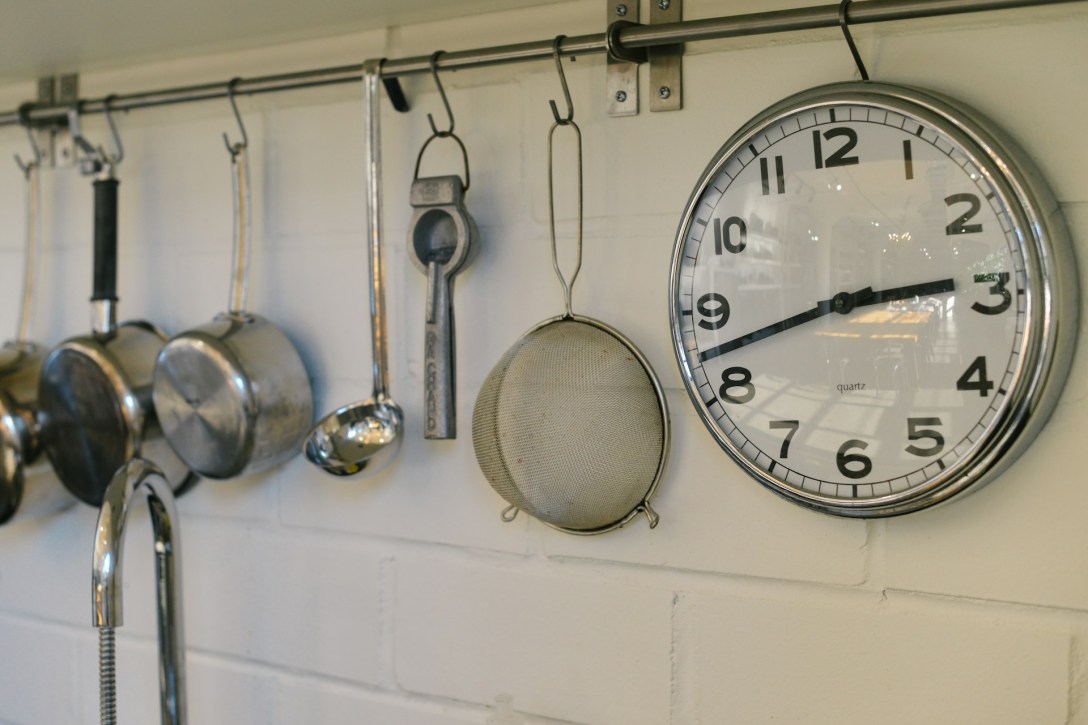
If your kitchen clock always feels a few minutes behind, you’re not alone. Most of us check that wall clock without thinking twice, until it starts drifting and leaves us running late without realizing it. The cause might not be the clock itself but what’s powering it.
Kitchen clocks often run on simple AA batteries, and their timing depends on how steady that power is over time. When batteries weaken or wear out, the clock can struggle without fully stopping. Some slow down so gradually we don’t notice at first. It gets worse during winter, when colder conditions quietly work against low-power devices like clocks. It helps to know that something as easy as switching the type of battery—and how we charge it—can keep things ticking on schedule. Using the right kind of battery setup, like a lithium ion AA battery charger, can go a long way toward solving this small but annoying problem.
Why Kitchen Clocks Fall Behind
Kitchen clocks don’t use much energy, but they do need that energy to be steady and reliable. Most of them are powered by a single AA battery, which feeds just enough voltage to keep the time moving hour by hour. But when that voltage dips, even a little, the clock won’t always handle it well. You won’t see an “error” message. It won’t blink or beep. It just quietly slows down.
That’s because clocks rely on tiny circuits that stay synced to very precise timing. If they start getting less power than they expect, the internal parts may shift slightly off rhythm. Over time, this adds up to lost minutes. And if it stays like that long enough, you’re suddenly ten minutes late without knowing why.
Winter can bring extra trouble for clocks. Many appliances and furniture shift closer to vents, windows, or tile walls during holiday decorating. Some of those spots turn colder than others, and clocks left in those zones may feel the change. The electronic parts inside are built to perform at room temperature, and even a small drop can influence how they hold time.
The Hidden Problem with Standard AA Batteries
Most people grab alkaline batteries for clocks without thinking much about it. They’re easy to find and seem to last a while—until they don’t. What’s tricky is that they lose energy gradually. As they get weaker, the power they send starts to dip in small waves, not all at once. This slow, uneven drain is called voltage sag, and it’s a big reason your clock might start to fall behind.
Voltage sag doesn’t usually matter for things like battery-powered toys or remotes. But when something uses constant, low energy—like a clock—it depends on a smooth stream of power. If the stream gets shaky, timing slips. And you don’t need the battery to be totally dead for this to happen. It might still look fine if you test it, but the clock’s already running slow.
This problem gets worse in cooler spots around the kitchen. Cold air near windows or tile can thicken the chemical mix inside the battery, making it harder for the energy to flow. If your clock lives near one of these chilly zones, its battery might act older than it really is. And by the time the drift is obvious, it’s already led to missed reminders or mistimed dinners.
Why Rechargeable Batteries Behave Differently
Rechargeable AA batteries used to get a bad rap for being unpredictable or short-lived. That’s changed. Newer versions, especially lithium ion models, give off steady voltage for most of their charge life, instead of gradually trailing off like older styles.
This means your kitchen clock gets the steady fuel it needs to keep time accurate down to the minute. It’s not about having a stronger battery. It’s about having a more reliable one. When the power level stays consistent, the clock doesn’t stutter or slow down. It just does its job.
Pairing this kind of battery with a lithium ion AA battery charger builds a rhythm that works all year long. Charge, swap, repeat. No guesswork on when the battery will give out, and no need to wait until the clock starts running slow. Maha Energy’s chargers, built to match AA lithium ion cells, maintain safe charging cycles and support longer battery life, keeping performance steady day after day. With the right tools, recharging becomes part of a simple routine that helps clocks stay on schedule every day.
Changes People Often Overlook in Winter
Kitchens go through plenty of small seasonal shifts during winter that nobody really thinks about. A warm casserole one minute, a cold gust from the back door the next. And your clock is quietly living through all of it.
Humidity from cooking and cooler air near tile backsplashes can throw off battery-powered devices more than you might expect. Areas close to windows or outside walls get colder, sometimes by just a few degrees—but that’s enough to change how a battery performs. Some heating setups, like space heaters or under-cabinet fans, create warm pockets of air that come and go through the day. These uneven temperatures mess with the chemical reactions inside the battery, even if it’s brand new.
We often place kitchen clocks wherever they’re easiest to see, but not always where they work best. One might be above the back door where cold drafts hit hardest. Another might be next to a coffee maker where steam lingers. Over the holidays, decorations, food prep, and changing routines speed all these changes up. It’s no surprise the clock starts missing beat after beat.
Right on Time, All the Time
It’s easy to overlook a kitchen clock until it starts misleading us. But that quiet little timekeeper matters more than it seems. It helps pace our cooking, get us out the door on time, and anchor daily routines. When it starts losing time, it causes little messes that pile up fast.
The good news is that keeping a clock on time often has more to do with power than device quality. Using AA batteries that put out steady voltage—especially during winter—helps that quiet tool do its job well. Lithium ion batteries, backed by a dedicated charger, provide the consistency that regular disposables can’t. And whether it’s the busy holiday rush or a quieter stretch of winter, it’s one less thing to worry about in a kitchen that has plenty going on.
At Maha Energy, we build the tools that help make those kinds of everyday moments run smoothly. Not flashy, not loud—just steady where it counts.
If steady power is the missing piece in your home clocks or other small devices, we make it easy to get started with a reliable setup. A well-matched battery and charger can keep things running smoothly, especially during the colder months when performance tends to dip. Our selection includes options like a dependable lithium ion AA battery charger built for long-term use. At Maha Energy, we focus on tools that work quietly in the background so you don’t have to think twice about whether your clock is on time.
 blog.mahaenergy.com